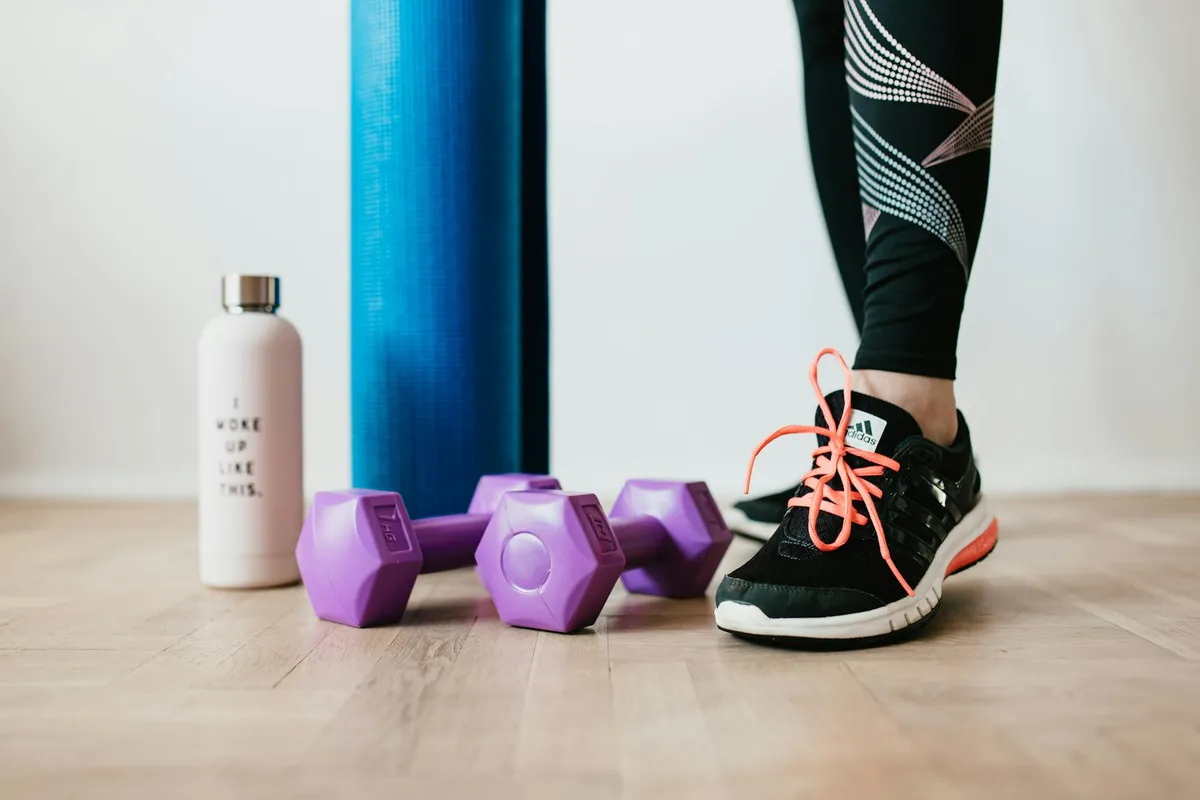
Train full body three non-consecutive days a week, alternating two workouts. Each one covers a squat or leg press, a press, a row or pulldown, a hip hinge and a core exercise, for 2–3 sets of 8–12 reps. Stop each set two or three reps short of failure, and add a little weight once you hit 12 reps on every set.
Walking into a gym for the first time is easier when you know exactly what to do. This beginner plan gives you three full-body workouts a week for your first eight weeks: the same handful of exercises, done well, with a simple rule for adding weight. It takes 45 to 60 minutes per session and works in any commercial gym or a basic home gym.
Table of Contents
How this beginner plan works
You train three non-consecutive days a week, such as Monday, Wednesday and Friday, alternating between two workouts, A and B. Each workout hits your legs, push muscles (chest, shoulders, triceps), pull muscles (back, biceps) and core. Full-body training suits beginners because you practise every movement pattern two or three times a week, and practice is what makes a lift feel natural.
Three rules keep the plan safe and effective:
- Leave two or three reps in the tank. Stop each set when you could still do two or three more good reps. Grinding to failure adds fatigue without adding much for a beginner.
- Technique first, load second. Add weight only when every rep looks like the last one.
- Write it down. Log the exercise, weight, sets and reps. Your notebook tells you when to progress.
Your weekly schedule
| Week | Monday | Wednesday | Friday |
|---|---|---|---|
| Odd weeks (1, 3, 5, 7) | Workout A | Workout B | Workout A |
| Even weeks (2, 4, 6, 8) | Workout B | Workout A | Workout B |
On the other days, walk. A 20 to 30 minute walk on rest days speeds recovery and adds to your weekly activity without eating into the next workout.
Workout A
| Exercise | Sets × reps | Rest |
|---|---|---|
| Goblet squat | 3 × 8–12 | 90 s |
| Dumbbell bench press | 3 × 8–12 | 90 s |
| Seated cable row | 3 × 10–12 | 90 s |
| Dumbbell Romanian deadlift | 2 × 10–12 | 90 s |
| Plank | 3 × 20–40 s | 60 s |
Workout B
| Exercise | Sets × reps | Rest |
|---|---|---|
| Leg press | 3 × 10–12 | 90 s |
| Lat pulldown | 3 × 8–12 | 90 s |
| Seated dumbbell shoulder press | 3 × 8–12 | 90 s |
| Hip thrust or glute bridge | 3 × 10–12 | 90 s |
| Dead bug | 3 × 8 per side | 60 s |
Machines and dumbbells are deliberate choices here. They are easier to learn than barbell lifts and let you start very light. Once you are comfortable, you can swap the goblet squat for a barbell back squat and the dumbbell press for a barbell bench press.
How much weight to use
In week one, choose a weight you could lift for about 15 reps and do 10. It will feel too easy, and that is the point: the first week is for learning the movements and finding your starting numbers. From week two, pick weights that leave you two or three reps short of failure at the top of the rep range.
How to progress: the double-progression rule
Each exercise has a rep range, for example 8–12. Keep the same weight until you can do the top of the range on every set with good form. Then add the smallest increment available, usually 2.5 kg (5 lb) on lower-body lifts and 1–2 kg (2.5–5 lb) on upper-body lifts, and start again at the bottom of the range. Most beginners can add weight every week or two for the full eight weeks.
If you stall on an exercise for three sessions in a row, check your sleep and food first. If both are fine, drop the weight by about 10 percent and build back up.
Warm up in five minutes
- Three to five minutes of easy cardio: bike, rower, or brisk walking.
- Ten bodyweight squats, ten hip hinges and ten arm circles each way.
- For the first exercise of the day, do one or two light sets of five reps before your working sets.
Cardio and daily activity
Strength training three times a week covers the muscle-strengthening part of the public health guidelines, which call for at least two days a week plus 150 to 300 minutes of moderate activity such as brisk walking. You can read what those guidelines say in our summary of the updated physical activity guidelines. Walking on rest days and 10 minutes on a bike after your workouts gets most beginners there. When you want a structured cardio session, try our cardio workout routine.
Nutrition basics for beginners
- Eat enough protein. Include a palm-sized portion of protein, such as chicken, fish, eggs, Greek yoghurt, tofu or beans, at each meal.
- Build plates around whole foods. Fill half the plate with vegetables or fruit and add a fist of starchy carbohydrates around training.
- Drink water through the day. See our tips on staying hydrated.
- Do not overhaul everything at once. Change one habit a week.
For what to eat before and after a session, read our guide to pre- and post-workout nutrition.
Common beginner mistakes
- Doing too much too soon. Six days a week of hard training in month one usually ends in soreness and a missed month two.
- Program hopping. Give a plan eight weeks before judging it.
- Ego lifting. Half reps with heavy weight build less muscle than full reps with a lighter one.
- Skipping sleep. Seven to nine hours is when adaptation happens; see how fitness and sleep affect each other.
After eight weeks: what comes next
By week eight you should be lifting noticeably more on every exercise and moving with confidence. Pick your next step based on your goal:
- Keep training three days a week with more exercise variety: full-body workout routine.
- Follow a structured progressive program: 12-week gym plan.
- Focus on building muscle: muscle-building gym plan.
- Focus on losing fat: gym plan for weight loss.
- Short on time: 30-minute workouts for busy people.
Training at home instead
You can run this plan at home with a pair of adjustable dumbbells, a bench and a resistance band for rows and pulldowns. If you are building a home gym, start with our guides to the best power racks, squat racks under $500 and gym floor mats.
If you have a heart condition, joint problems, are pregnant or have not exercised in a long time, check with your doctor before starting a new training program.
Frequently asked questions
How many days a week should a beginner go to the gym?
Three days a week is ideal for most beginners. It trains every muscle often enough to learn the movements and build strength, while leaving rest days for recovery. Two days still works if that is all you can manage.
How long should a beginner workout last?
About 45 to 60 minutes, including a five-minute warm-up. Five exercises of two or three sets each, with 60 to 90 seconds of rest, fits comfortably in that time.
Should beginners use machines or free weights?
Both work. Machines and dumbbells are easier to learn and let you start light, so this plan uses them first. Once your form is consistent, you can add barbell lifts such as the squat and bench press.

TrainCoreFit is dedicated to helping people build stronger bodies and healthier lifestyles through simple, practical fitness guidance. We share workouts, nutrition tips, and wellness advice designed for both beginners and experienced fitness enthusiasts. Our goal is to inspire consistency, confidence, and real progress in every fitness journey.
LATEST STORIES
- Fitness Pickleball Guide: Master the Court with Proven Tactics Posted By: TrainCoreFit
- Fitness Sunny SF-B1002 Indoor Cycling Bike Review Posted By: TrainCoreFit
- Fitness Strength Training Shields Hearts: Less Disease, No Cardio Needed Posted By: TrainCoreFit
- Fitness The Ultimate Guide to Staying Fit and Healthy This Winter Posted By: TrainCoreFit